
Beaujolais Nouveau

Ready to lay some down?
Explore cellar-worthy wines, hand-picked by our buyers to reward a little patience.
Every year, on the third Thursday of November, a wine that was hanging on the vine just a few months earlier gets poured all over the world. This year that's Thursday 19 November. It's the only wine with its own official launch day, and it has been getting people excited (and occasionally making wine snobs grumpy) for decades. Here's everything you need to know, plus an early look at what the 2026 vintage has in store.
So what actually is it?
Beaujolais Nouveau is a red wine made from Gamay and released just weeks after harvest. It's what the French call a vin de primeur: a first taste of the new vintage, made to be drunk young, fresh and without ceremony.
It can only come from the Beaujolais and Beaujolais-Villages appellations. The ten crus, such as Morgon, Fleurie and Moulin-à-Vent, are left alone to make their more serious, longer-lived wines. Nouveau is the region's party trick, not its only one.
A short (and slightly boozy) history
Long before it was a global event, new Beaujolais was a local tradition. The silk weavers of Lyon, the canuts, would drink the young wine barely weeks after picking, and growers sent their first barrels down to the city's bars by cart and later by train.
Things became official in 1951, when growers were allowed to sell this young wine before the usual mid-December date. A fixed release day followed, and in 1985 it settled on the third Thursday of November, where it has stayed ever since.
Then the marketing kicked in. Producers, led most famously by Georges Duboeuf, turned the release into a race, with bottles rushed to Paris, then London, then across the world. "Le Beaujolais Nouveau est arrivé!" posters went up in bars everywhere, and by the late 1980s a huge share of the region's grapes were going into Nouveau.
The boom didn't last forever. Oceans of simple wine gave Beaujolais a reputation for bubblegum and not much else. Today the approach is smaller and better: growers making proper, characterful Nouveau, and plenty of people finally discovering the brilliant crus along the way.
How do you make wine that fast?
Going from vine to glass in around ten weeks takes a clever bit of winemaking.
- Pick by hand. Beaujolais is hand-harvested, and the grapes arrive at the winery as whole, unbroken bunches.
- Fill the vat. The whole bunches go into the tank. The weight of the grapes on top crushes those at the bottom, and their juice starts fermenting in the usual way.
- Let the bubbles do the work. That fermentation gives off carbon dioxide, which fills the tank. The intact berries sitting in this CO2 blanket start fermenting from the inside, inside their own skins. This is semi-carbonic maceration, and it's the secret behind Nouveau's famous aromas: think banana, bubblegum, kirsch and pear drops.
- Keep it short. After just a few days the grapes are pressed and the wine finishes fermenting off the skins. Less time on skins means soft tannins and bright, juicy fruit.
- Bottle and go. The wine is stabilised, bottled and shipped in a matter of weeks, ready for the big day.
The result is a wine built for pleasure, not patience: fruity, fresh and very easy to drink.
The 2026 vintage: small, sunny and seriously early
If 2026 were a person, it would be the friend who turns up early, sunburnt and carrying far less than promised.
- The weather: a scorching, bone-dry summer, with heatwave after heatwave and some nasty hailstorms in June and July.
- The harvest: one of the earliest on record. Picking started in August, weeks ahead of normal, when growers would usually still be on holiday.
- The crop: tiny. Regional estimates put the harvest about a third down on average, and some hail-hit villages fared much worse. The berries themselves were small and light.
- The grapes: very ripe and full of flavour, with plenty of natural sugar. The challenge for winemakers has been keeping that trademark freshness.
What it means for your glass: expect a darker, riper and more concentrated Nouveau than usual, with a bit more depth behind the fruit. The best examples should still have that lively, crunchy streak that makes Nouveau such fun.
What it means for your plans: there simply isn't much of it this year, so don't leave it to the last minute.
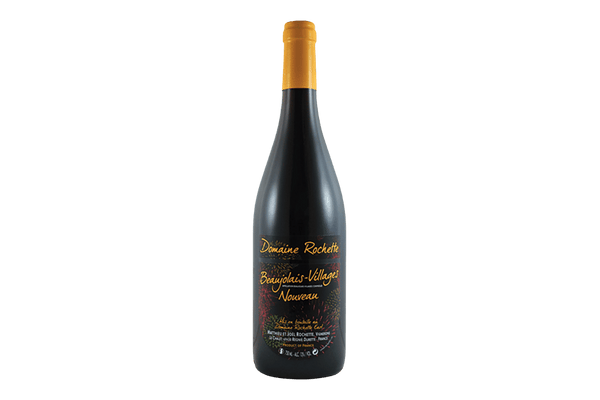
Our Nouveau: Domaine Rochette
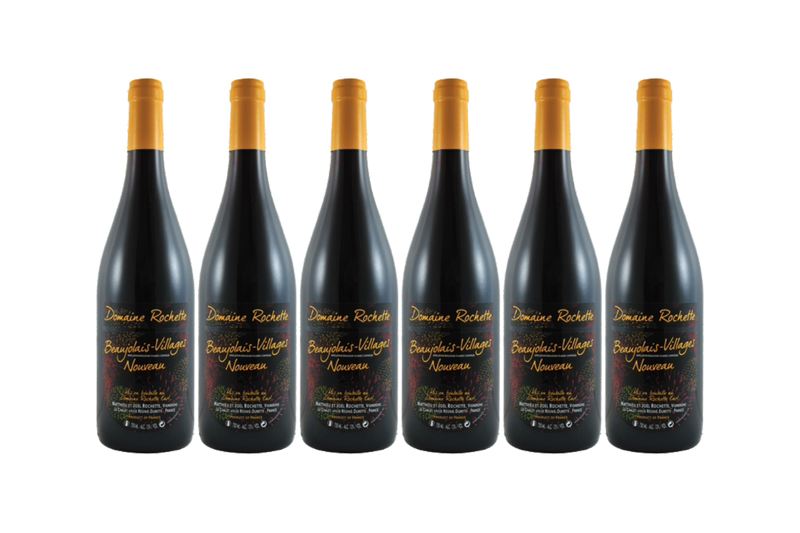
This is our fifth vintage pouring Domaine Rochette's Beaujolais-Villages Nouveau, and it has become a firm favourite with so many of you. It's juicy, bright and full of crunchy red fruit, everything good Nouveau should be. The 2026 is released on Thursday 19 November and is available to pre-order now, by the bottle or by the case with 15% off.
How to enjoy it
The golden rule: don't overthink it.
- Chill it a little. Twenty to thirty minutes in the fridge brings it to around 12 to 14°C, which makes the fruit sing.
- Skip the decanter. This is a pop-and-pour wine.
- Keep the food simple. Charcuterie, roast chicken, a cheese board or a proper Lyonnais spread of saucisson and lentils all work a treat.
- Drink it soon. Nouveau is at its best over the winter months, though this year's riper, more concentrated style might just hold on a little longer.
Most of all, open it with friends. Celebrating the new vintage is the whole point. À votre santé!
Beyond Nouveau
If Nouveau gets you hooked on Gamay, there's a whole region to explore. From the silky, perfumed reds of Fleurie to the deeper, structured wines of Morgon and Moulin-à-Vent, Beaujolais is one of the best-value corners of France.


